Author: Dr. Ntale Peter, (Makerere University). Co-Author: Kayizzi Godwin (The Big Family Health Club).
Photographer: Rwenzori Tracking Services Guides (Remegious, Francis and Enock)
Author: Dr. Ntale Peter, (Makerere University). Co-Author: Kayizzi Godwin (The Big Family Health Club).
Photographer: Rwenzori Tracking Services Guides (Remegious, Francis and Enock)
named after Bamwanjara—the legendary head porter who guided a Scottish hiker through the Rwenzoris in the early 1900s—stands today as both a geographical landmark and a living monument to human endurance. Oral histories among the Bakonzo people recall Bamwanjara as a man of extraordinary strength, instinct, and courage, a guide whose mountain wisdom saved an early European expedition from disaster when snow and fog trapped them on the high ridges. In recognition of his bravery, the windswept saddle where he led the group to safety was christened Bamwanjara Pass, a rare tribute in an era when few African porters were acknowledged by name. More than a century later, his legacy endures—not only in the name etched into the Rwenzori’s map, but in the struggle every climber endures to cross that same formidable stretch of mountain.

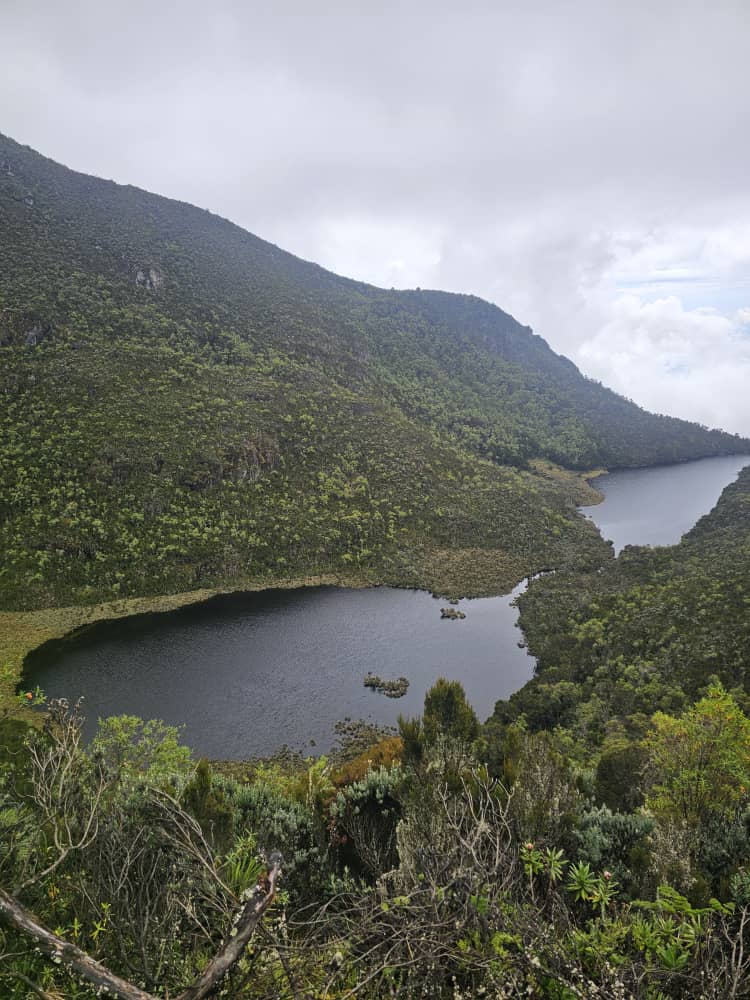
Bamwanjara Pass is a high-altitude saddle in the Rwenzori Mountains National Park in western Uganda, located along the Rwenzori Tracking Services Trek, linking the Bujuku Valley to Huniwicks Camp. Rising to approximately 4,450 meters above sea level, the pass sits at a strategic point on the main ridge between Mount Stanley and Mount Baker, offering one of the most elevated and exposed traverses in the Rwenzori range. Its geographical and ecological significance stems from its role as both a climatic divide and a vantage point over the glaciated peaks of Mounts Stanley, Speke, and Baker. Characterized by persistent fog, freezing winds, and extensive bogs formed by near-constant precipitation, Bamwanjara presents one of the most demanding sections of the climb, requiring careful navigation and high physical endurance. Despite its harsh conditions, it remains a symbolic and experiential highlight of the Rwenzori expedition, representing the intersection of natural adversity, ecological transition, and the climber’s psychological resilience in one of Africa’s most challenging mountain environments.
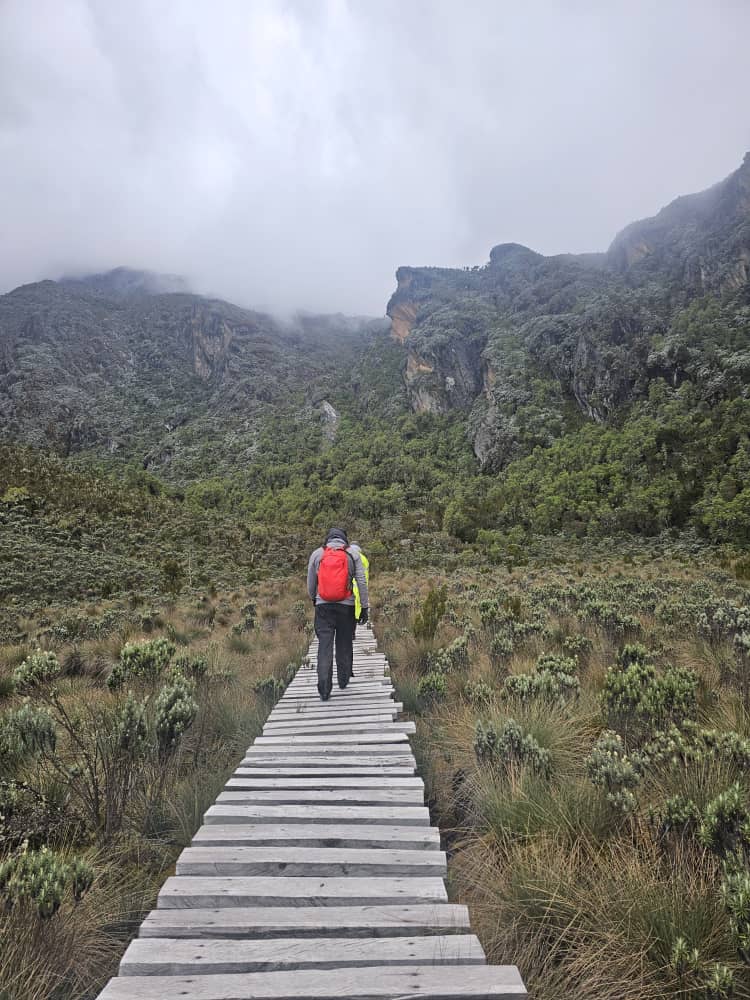
Perched at over 4,400 meters above sea level, Bamwanjara Pass epitomizes the physical and psychological challenges that define high-altitude trekking in the Rwenzori Mountains. The combination of thin air, sub-zero temperatures, and relentless wind exposure creates an environment that severely tests cardiovascular endurance and mental resilience. The trail itself is a mosaic of unstable rock, deep bogs, and slippery wooden walkways that demand constant vigilance and balance. Hypoxia, fatigue, and cold-related strain often set in as climbers navigate steep ascents through mist-laden ridges where visibility drops to a few meters.
The perpetual moisture saturates gear and clothing, increasing discomfort and energy loss, while the isolation of the pass heightens the psychological intensity of the climb. Despite these hardships, Bamwanjara’s challenges, the pass provides a scenic view of the glittering peaks of Mount Stanley, Mount Speke, and Mount Baker, transforming the ordeal into an experience of transcendence. Thus, Bamwanjara Pass stands not merely as a physical obstacle but as a rite of passage, symbolizing the intersection of human endurance, humility, and the sublime power of nature in Uganda’s “Mountains of the Moon.”
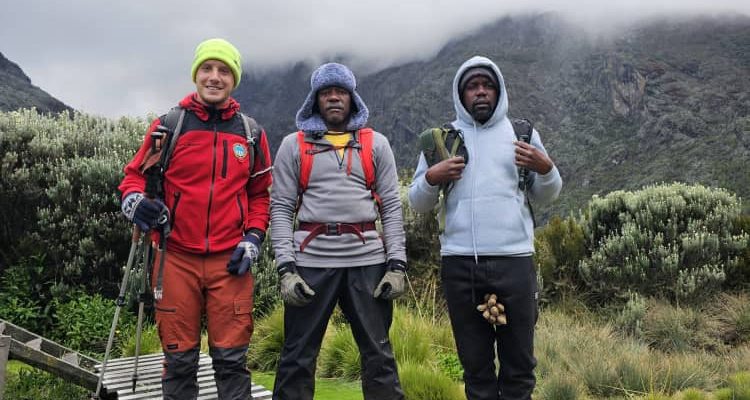
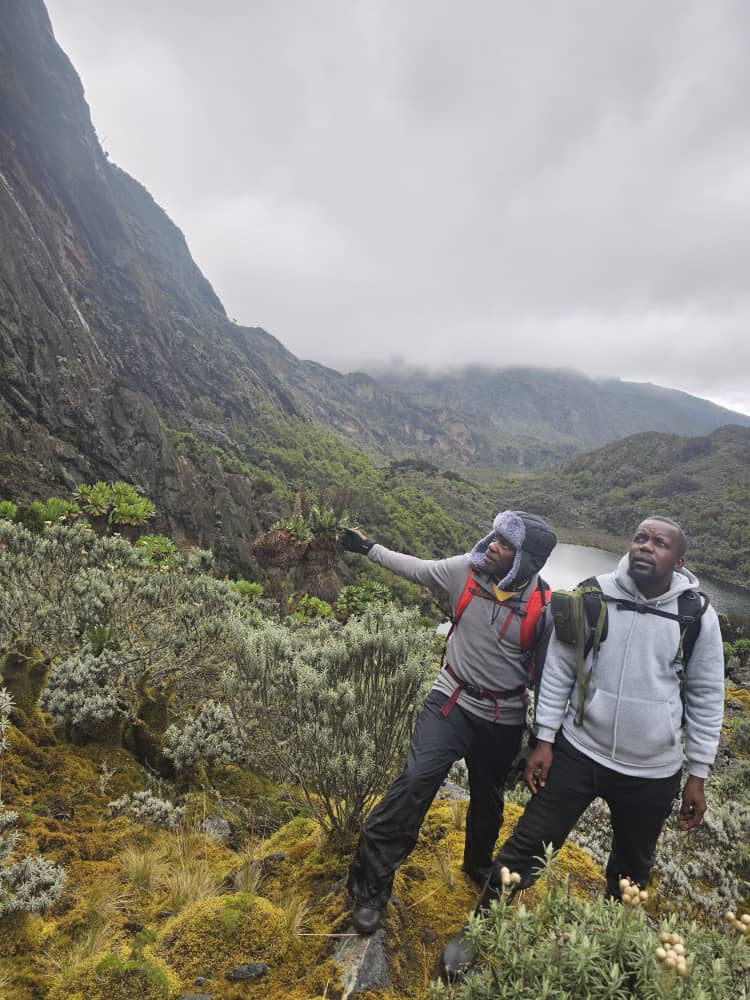
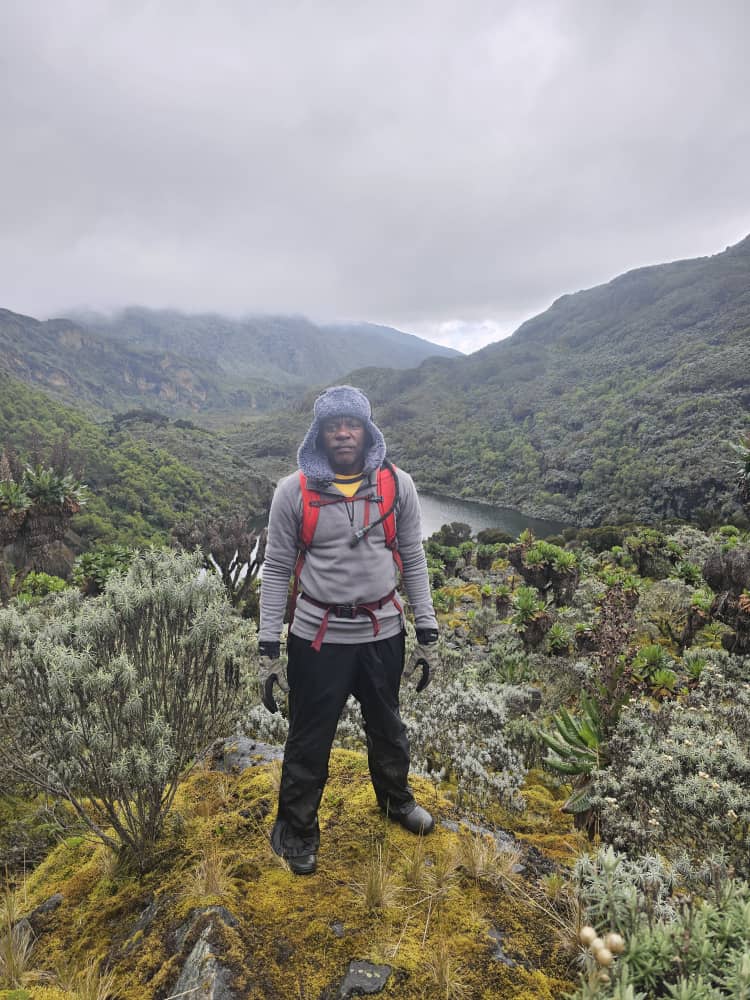
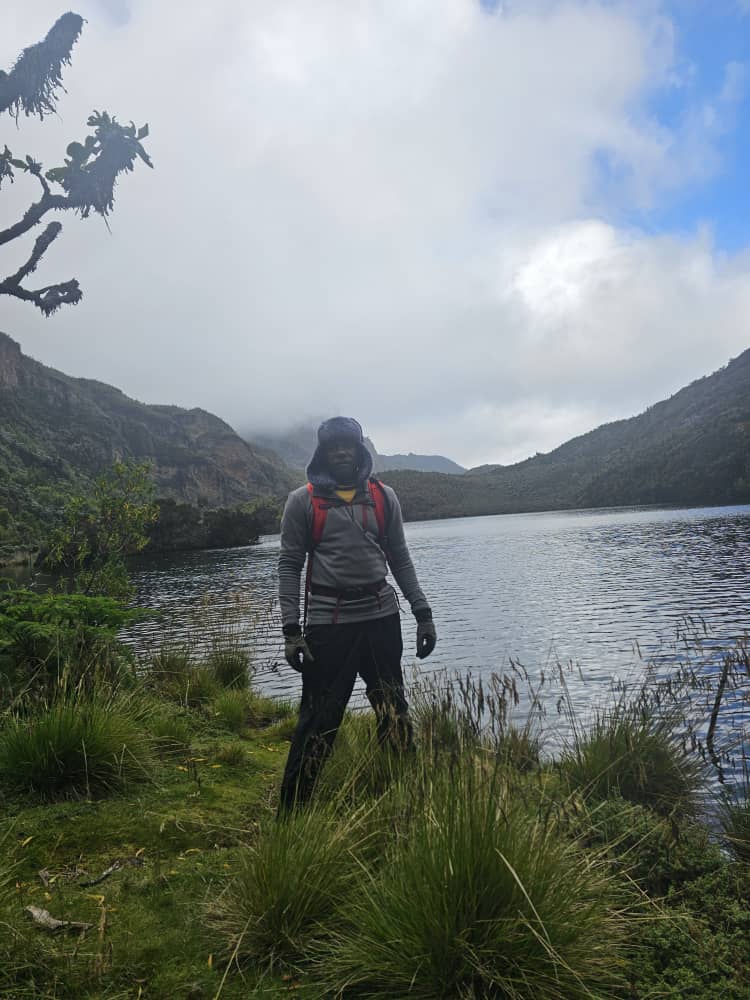
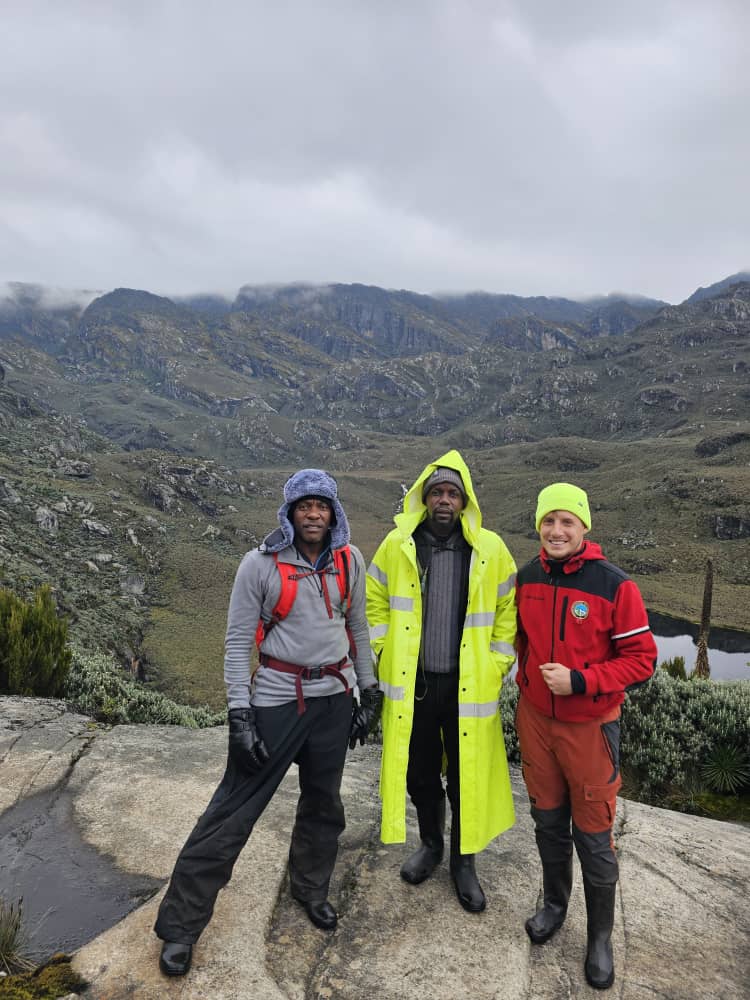
When we—Dr. Ntale Peter, Godwin Kayizzi, and Jonathan, our Polish friend, guided by Remegious, Enoch, and Francis, approached Bamwanjara Pass; the mountain revealed its harshest side. There were no wooden walkways, no firm ground, but only endless stretches of black bogs that clung to our boots like heavy weights. Every step sank deep into cold, sucking mud that threatened to steal our footing. The air grew thin and sharp, the wind howled across the ridge, and our soaked clothes offered little warmth. Remegious led the way with measured confidence, testing each patch of ground before committing his weight, while Francis, the quieter of the two, stayed close behind to steady us when we slipped.
Godwin and I trudged silently between them while Enoch, together with our Polish friend, lagged behind several meters. The higher we climbed, the more the cold seeped into our bones, numbing fingers and stiffening knees. It was no longer a hike but a slow, determined struggle through a landscape of mist, mud, and exhaustion. And yet, in that brutal silence, there was something profoundly humbling—a sense that we were being weighed and tested by the same mountain that once challenged Bamwanjara himself.
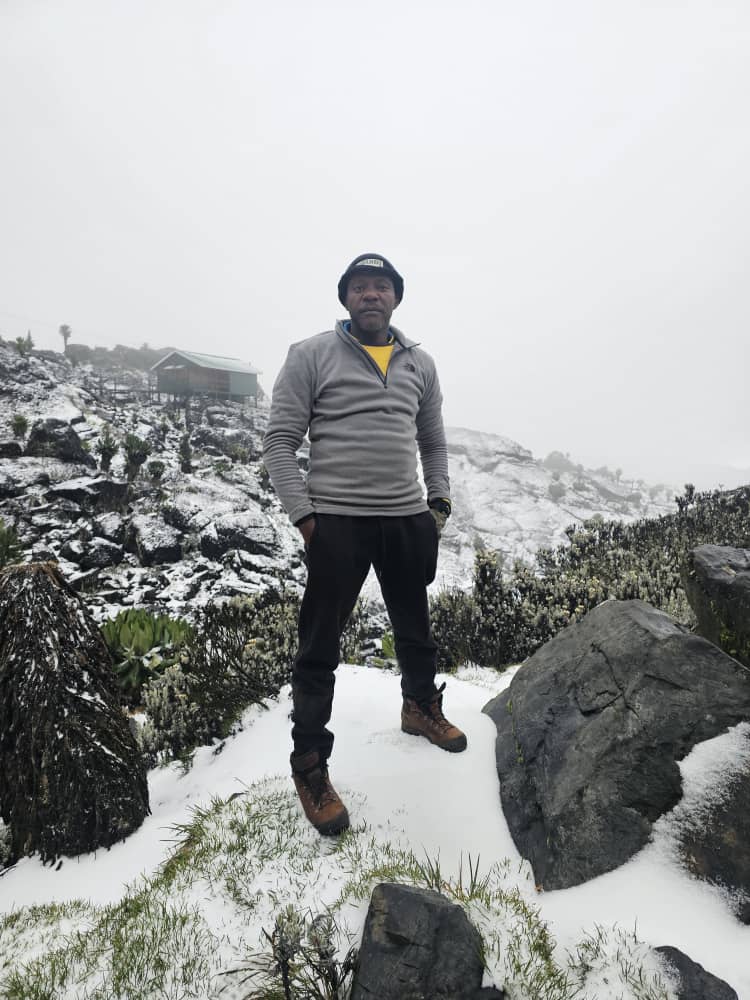
At the summit of Bamwanjara Pass, the world turned white. Thick fog rolled in from the Congo side, swallowing the peaks and leaving only the faint outline of our next camp somewhere beyond the ridge. The wind cut through our jackets like glass. Our gloves were soaked, and the mud on our boots had frozen into a stiff crust, making the descent into the Bamwanjara valley relentless. The trail dropped sharply through wet rocks and tangled alpine vegetation. Each step demanded focus; one wrong move could send you sliding into the bogs below. The mist thickened as we sloped downward, blurring the line between ground and sky.
Water trickled beneath every patch of moss, turning the path into a narrow stream. Every few minutes, we paused to catch our breath and scan the fog for the faint outline of the next marker pole. The slope seemed endless, testing both balance and endurance.
The slope seemed endless, testing both balance and endurance. Every downward stretch brought a new challenge—ankle-deep bogs that swallowed our boots, slick rocks glazed with ice, and hidden gullies that forced us to crawl or slide on all fours. Our legs trembled under the strain, and every muscle burned from hours of fighting gravity and cold. The wind no longer howled from above; it now swept up the valley in sudden bursts, pushing against our descent as if the mountain itself resisted our passage. Conversation faded to short, practical shouts—“Careful here,” “Watch your step,” “kneel.” The trail zigzagged sharply along the ridge before dropping into a basin of fog where visibility shrank to mere meters. Every sense narrowed to the essentials—sight, balance, breath. It was a slow, deliberate crawl through silence and cold, the kind of terrain that stripped away all pretense of adventure and left only endurance. When the faint outline of Magherita Camp finally appeared through the mist, it felt less like arrival and more like survival, a quiet triumph wrestled from the mountain’s unforgiving grasp.
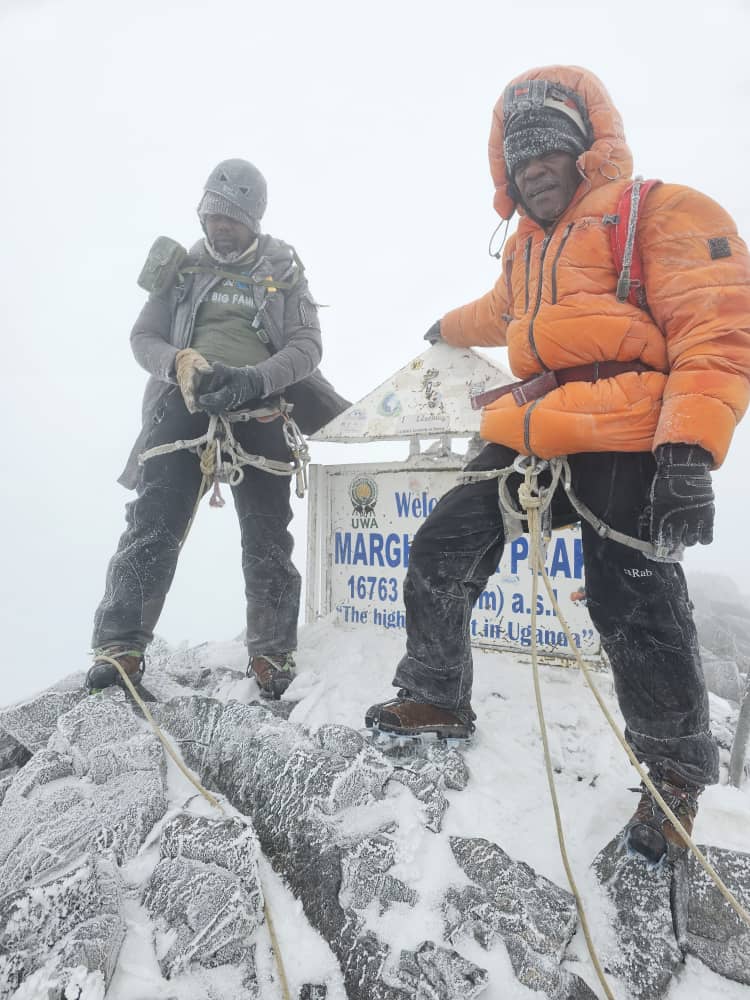
After a 1 a.m. ascent from Magherita Camp to Magherita Peak, a harrowing five to six hours of ice, wind, and sheer will, you return to camp utterly exhausted. Fingers numb, clothes soaked, and lungs burning from the thin air, there’s barely time to celebrate as you have only a few minutes to rest, pack up, and begin the long descent back to Huniwicks. The biggest challenge at this moment is that the body is now moving on instinct. Every muscle aches, and every step feels heavier. The route winds back across glaciers slick with meltwater, then down into the bogs and rocky ridges that guard Bamwanjara Pass.
The temperature shifts sharply—frozen air giving way to damp, heavy mist that clings to your skin and gear. The climb toward the pass feels endless, each rise revealing another ahead. But when the trail finally tips downward, a faint comfort returns. The air grows thicker, warmer. The mist begins to glow with filtered light. Far below, Huniwicks Camp emerges through the fog, its wooden huts perched like a promise of warmth. Every step toward it feels like reclaiming the world again—one slow, slippery stride at a time.
Bamwanjara Pass, rising above 4,400 meters in the Rwenzori range, offers vital lessons in endurance, preparation, and humility for any serious hiker. Its unpredictable terrain—shifting from glacial ice to deep bogs within meters—demands not only physical fitness but also disciplined pacing and altitude awareness. Climbers must recognize that rapid movement in thin air quickly leads to exhaustion and altitude-related complications; thus, steady progress, hydration, and controlled breathing are essential. Equally important is preparedness for persistent wetness and cold, which make waterproof gear, thermal layering, and dry clothing indispensable for survival and comfort.
The guidance of experienced local porters and mountain guides is critical, as they possess an intuitive understanding of the terrain’s hidden dangers. Above all, Bamwanjara Pass teaches a profound respect for nature’s impartiality—it humbles even seasoned mountaineers, replacing notions of conquest with lessons of resilience, patience, and adaptation in one of Africa’s most challenging high-altitude environments.